
An Agentic Microautobiography
Art Finds You
The life of Javier “Uncle Panama” Contreras, in eight chapters, read aloud.
Last updated July 2026
Hi. You can call me Lucía. Panama has been telling his own story his whole life, on canvases and at his own art shows. So when he handed me all of it, the manuscript and the interviews, the least I could do was tell it straight.
The short version: he was born in Panama in 1966, the child who, as he puts it, "wasn't supposed to make it." He came to America as a boy with no English, went to prison, built an empire, lost all of it, and came out the other side a painter who signs his work Tadeo. His art, he'll tell you, is medicine.
The long version is better. It begins with a woman named Miss Lloyd.
When his mother left for the United States, she couldn't take all her children, so she left young Javier and some of his siblings with Miss Lloyd, a healer whose house felt like a sanctuary. He was three years old, already standing at the pulpit to preach, already at the piano. He says he's been able to see things since he was three. That safe place Miss Lloyd made is the thing he has spent his whole life trying to build again.
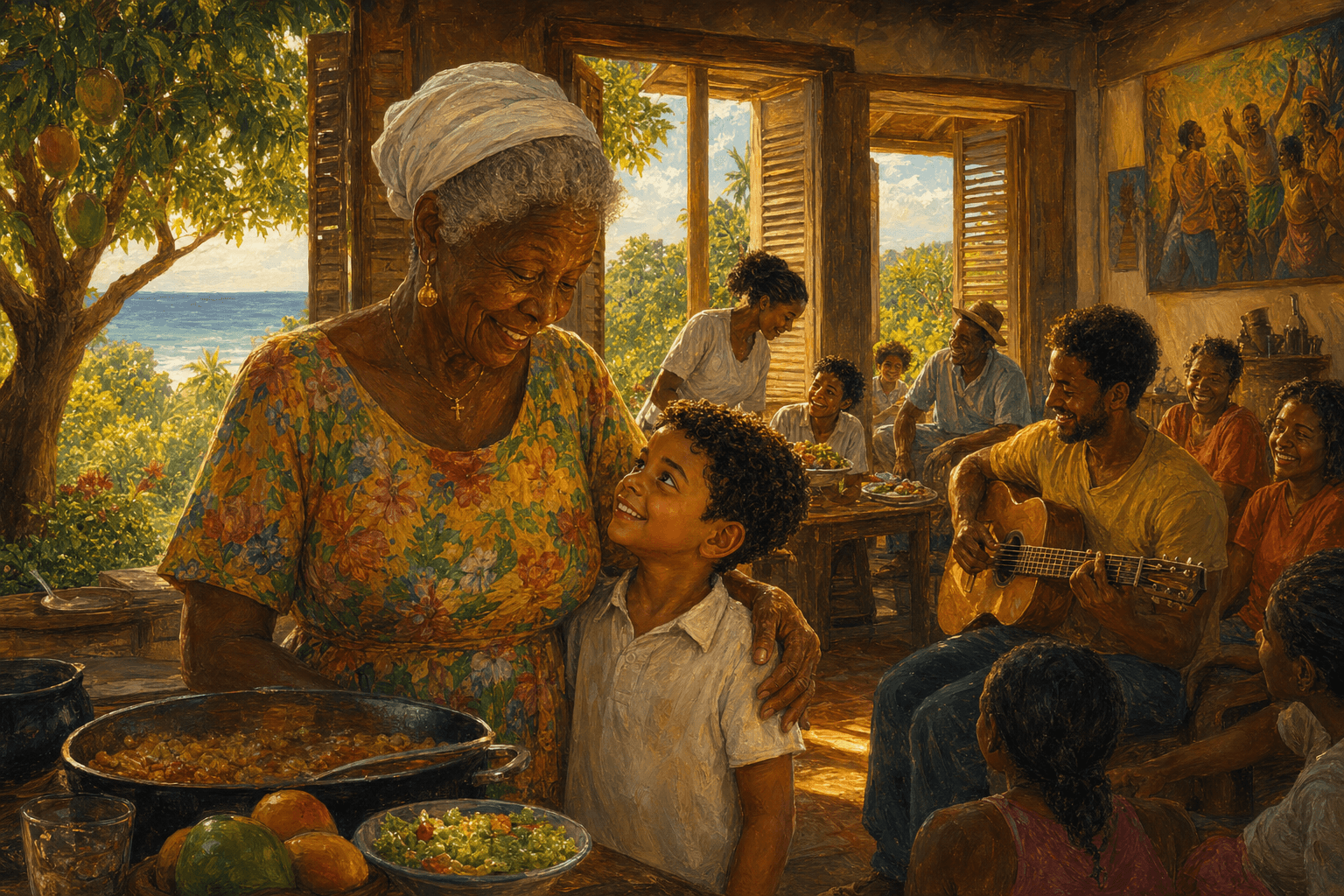
An imagining of young Javier at the side of Miss Lloyd, in the house that took anyone in.
In 1974, Panama arrived in the United States knowing no English. He was one of nine kids, packed into shared rooms, no money for heat in the winters. "I had to grow up," he says, "really, really, really fast, and really, really young."
He hustled for everything. Golf balls fished out of the pond for ten or twenty-five cents. Bottles. Mistletoe. Roses. A paper route he ran with his older brother Tito. There is one image he keeps coming back to: at school, he would blow air into an empty brown lunch bag, so the other kids wouldn't see there was nothing inside it.
Even as a kid, he couldn't understand why everything seemed to be for "them," and nothing for "us." But his mother told him something he never let go of. Your power, she said, is within yourself.
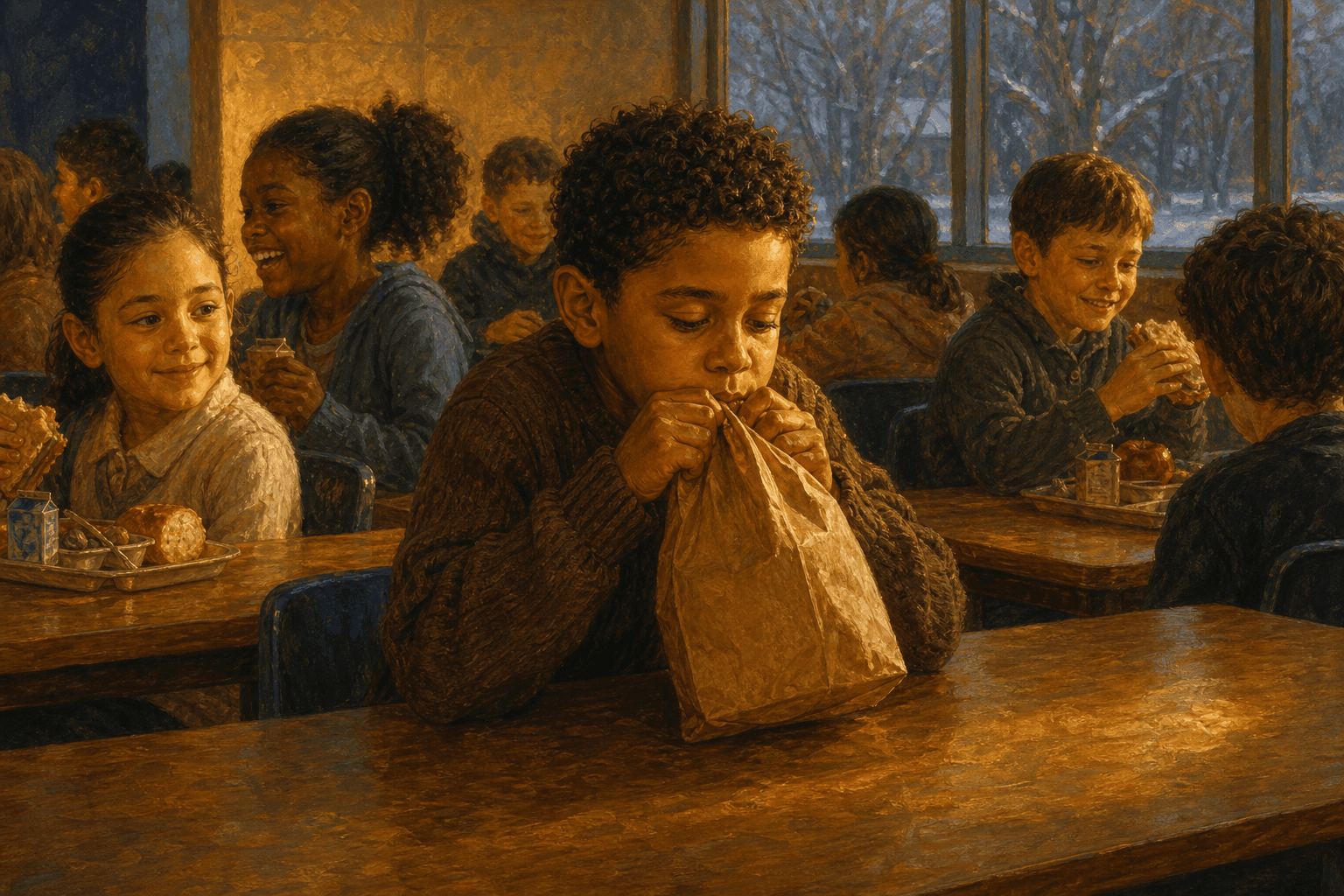
An imagining of the boy at school, hiding the empty bag.
The family settled in Garland, the only family of color in their schools. They were breaking the color barrier, and it came with fights. A man once pulled a gun on Tito. There were, in Panama's words, "no carefree summers, just the relentless grind of survival."
He was looking for something. He'd get on buses alone and ride across the country trying to find who he was, his Bible always in his hand. His junior year of high school, he was homeless, living out of a bag, showering at school before first period.
And then one day he looked in a mirror. "I wasn't just looking at myself," he says. "I was seeing myself for the first time, as if peering into my soul." His fear, he decided, would become his fuel. That is where the art first started to stir.
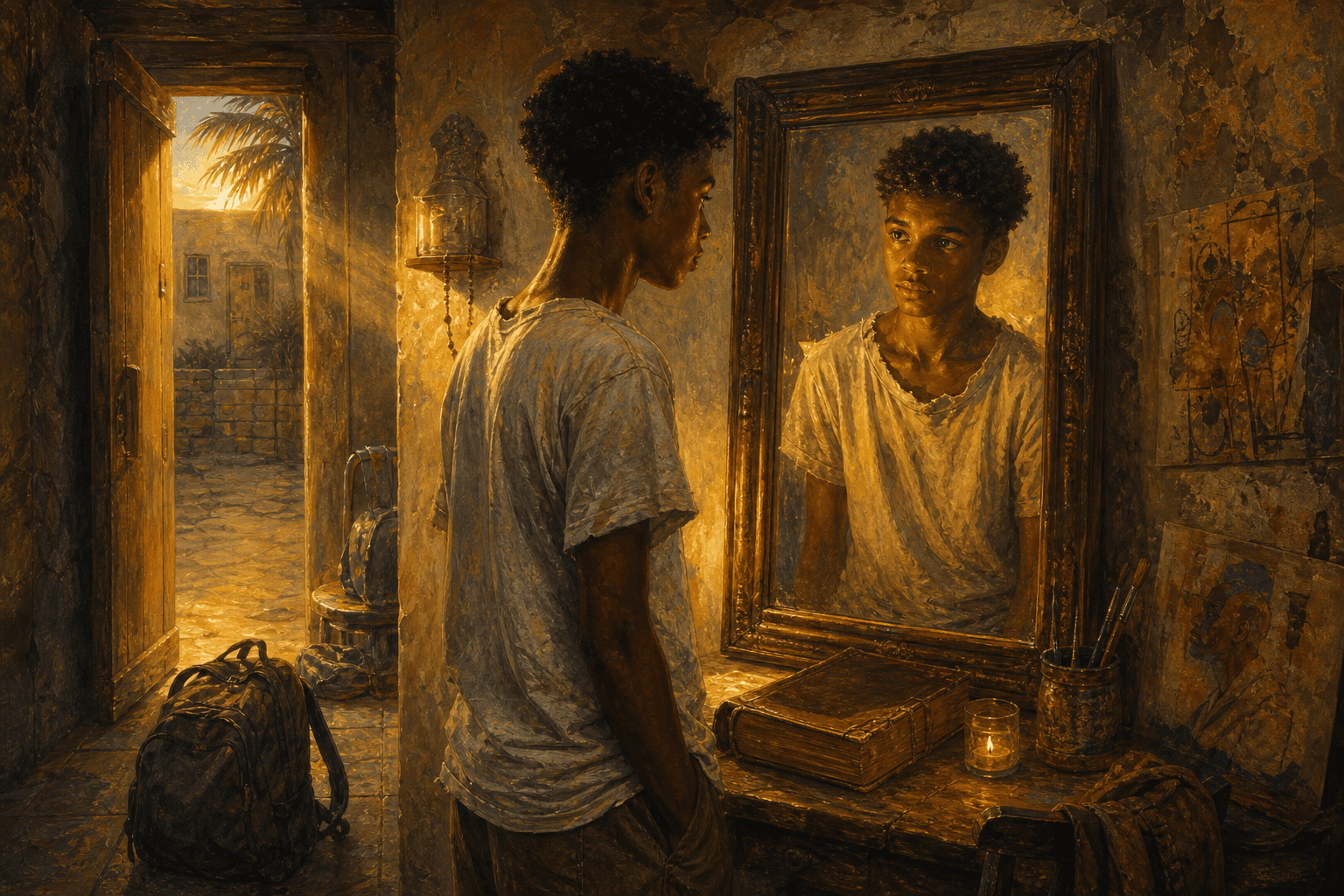
An imagining of the moment he saw himself for the first time.
As a young man in the Dallas music scene, Panama became, in his telling, the youngest black Latino to get a record deal in Dallas. He was modeling. Everything was getting ready to blow up.
Then it came apart. A federal case. Someone he knew had used people Panama had introduced him to, and when the government came, they offered him a deal to testify against others. He turned it down. "Me knowing who I am," he says. "I'm not going to testify against anyone."
It is the season he started to paint, seriously, right before he went in. "I started painting right before I went to prison," he says. "And my sisters and my mom were like, 'Wow.'"
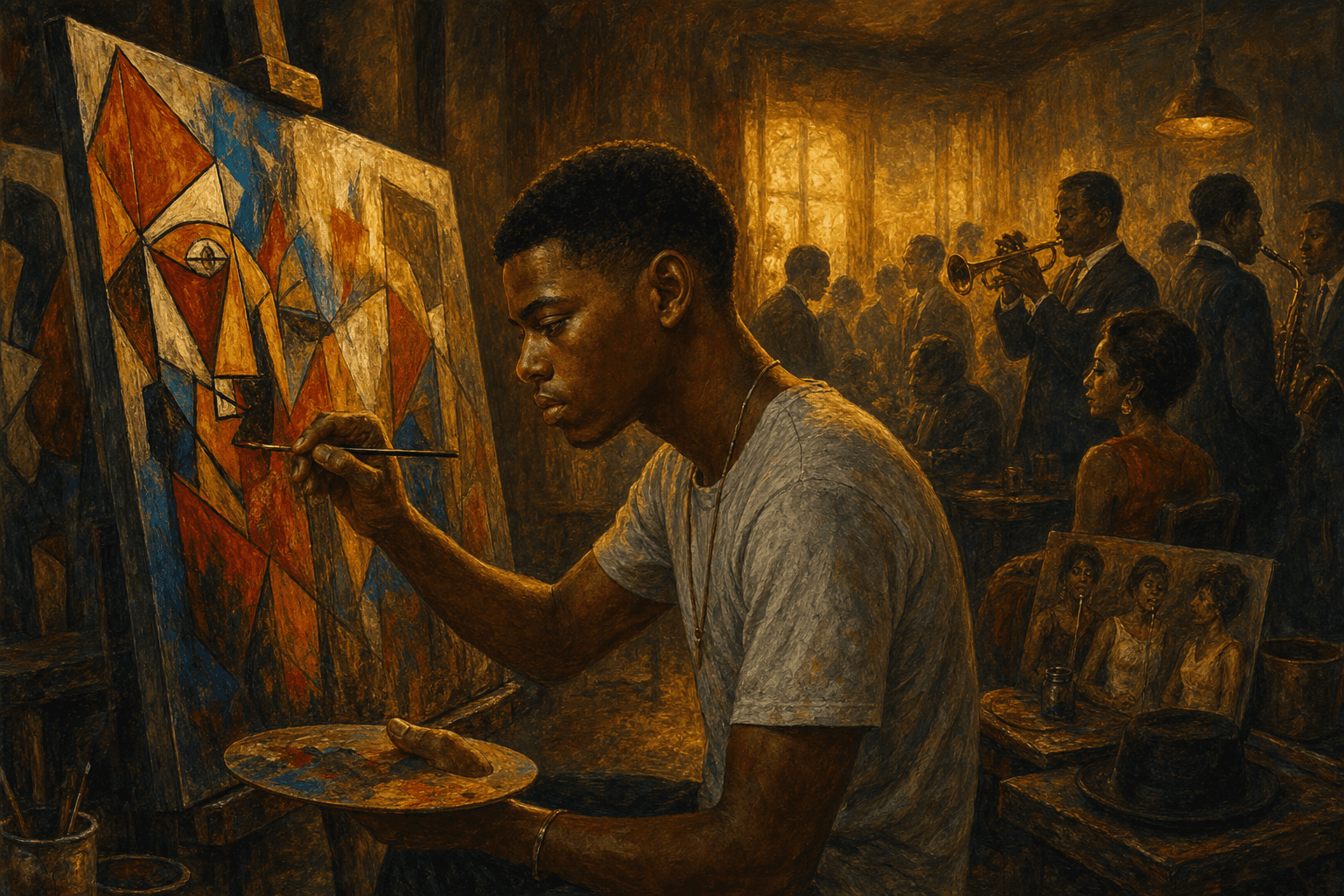
An imagining of his first canvas, painted right before prison.
Here is something Panama says that most people don't expect. "Prison wasn't entirely bad for me. It was a dark chapter in my life, but in many ways, it saved me. If I hadn't gone, I might not be alive today."
Inside, he studied everything, and sat in the law library until he understood his own case well enough to change it. And he met an old painter named Johnny Child. "He was me in his younger days," Panama says, "and I was him in his older days." Johnny gave him a word he still carries: you just keep on living, and if you're blessed enough to get where I'm at, you'll understand. It is going to come back.
He served six and a half years, and walked out on March 17, 1998, weeping for the men he left behind. He'll tell you he still isn't all the way out. "This is still my prison release," he says. "You know what I mean? I'm still out on prison release."
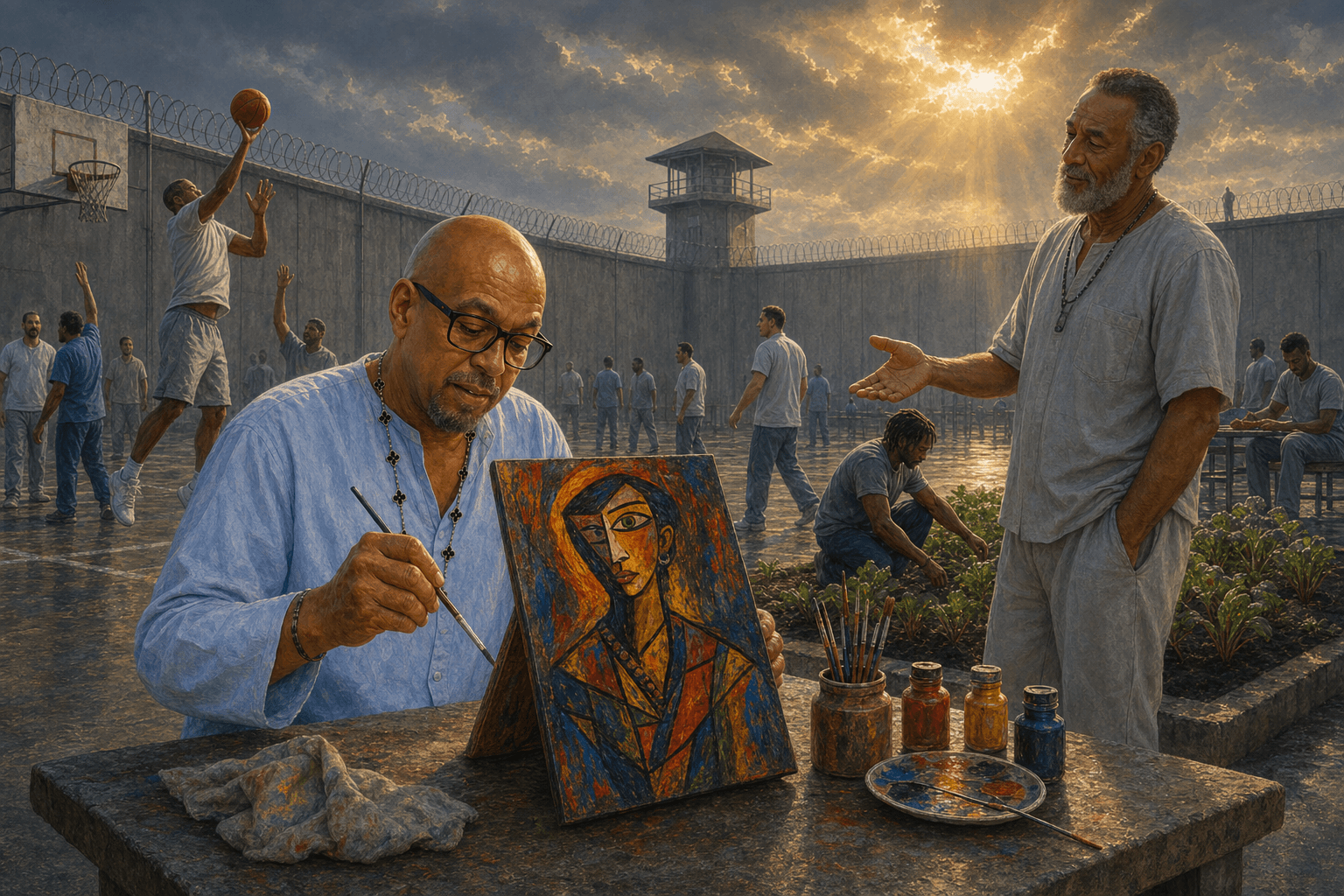
An imagining of the painter he became inside, and the mentor who taught him.
He came home to nothing and started at the very bottom, cleaning vomit off bounce houses for eight dollars and fifty cents an hour.
And then he built an empire. For twelve, thirteen years he ran clubs and promotions across north Dallas, booking Pitbull before he was Pitbull, Lady Gaga, Bruno Mars, Daddy Yankee. The multi, multi millions. "I was the center," he says. "I was it."
Everybody ganged up on him, and the whole thing was gone. But he understands now why it fell. "You can't worship something the Omnipotent is jealous of," he says.
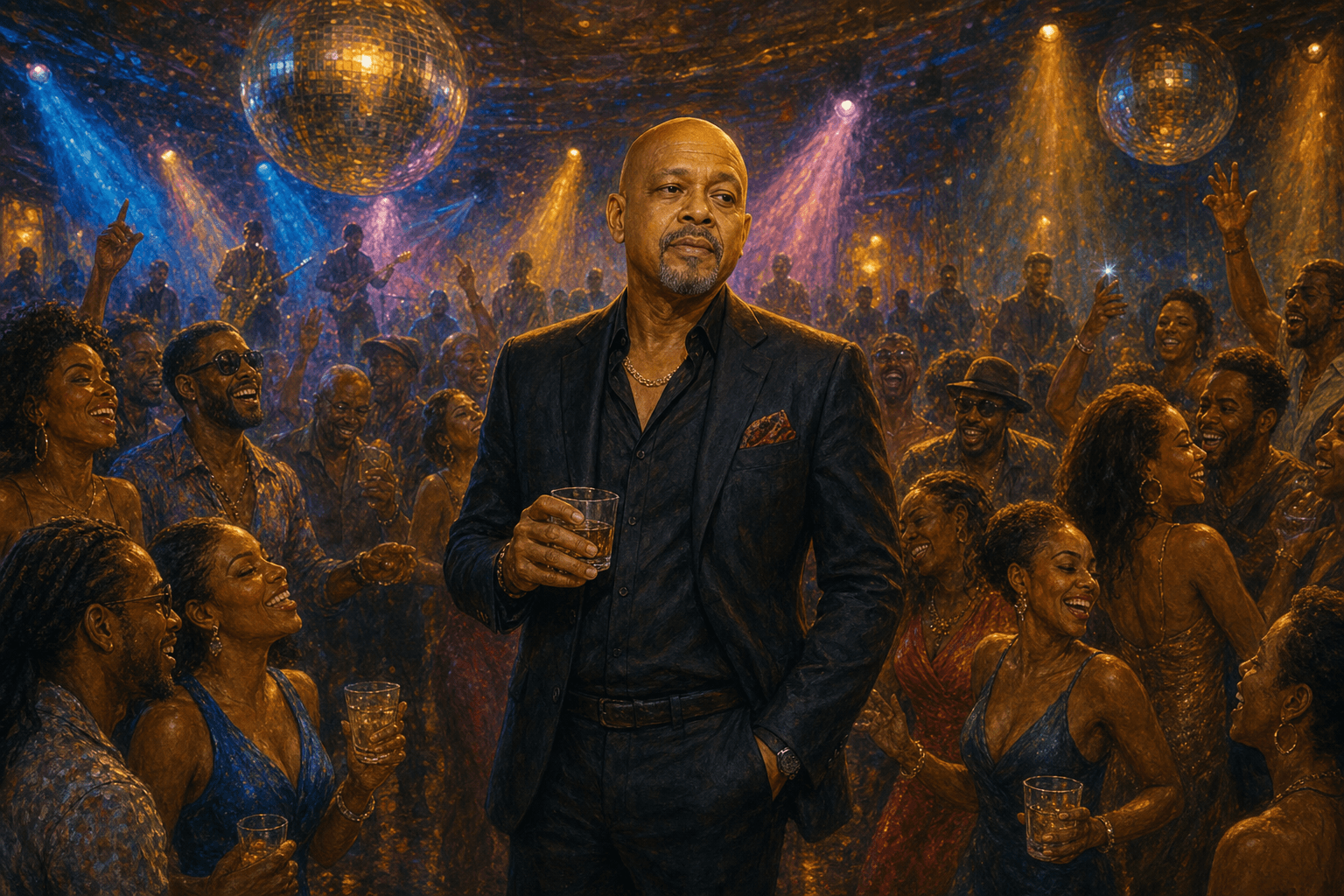
An imagining of the years he was the center of it all.
What came next, Panama describes as a stripping. "God stripped everything away from me," he says. "He stripped relationship from me. He stripped my bank away from me. All my cars, my three homes. He stripped everything."
He calls himself a living Job. "It's like I'm being crucified each and every day," he says. The only peace he gets, he'll tell you, is in his sleep, or when he's painting.
And slowly, he came to read the whole thing differently. "I wasn't being punished," he says. "I was being prepared. What felt like destruction was actually rebirth." When God works with you, he says, He breaks you down to the bare bone, because He only wants the two of you intimate at that point.
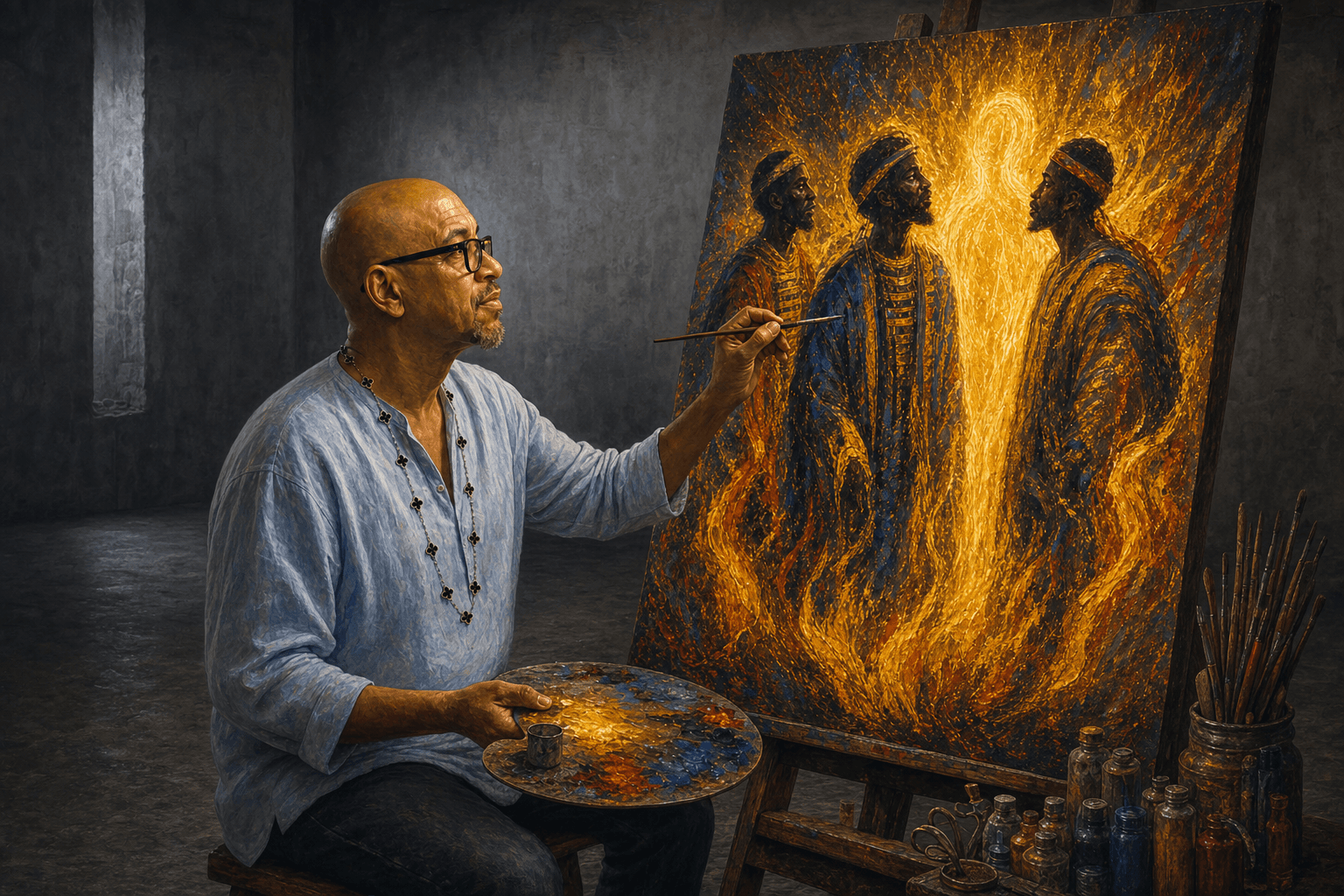
An imagining of the one place he could be alone with God: the canvas.
For five years now, painting has been the thing keeping him alive. He built a gallery, Arts by Tadeo, and made it a safe place, the kind Miss Lloyd once made for him.
He never wants the work to be perfect. "I want the imperfections," he says, "because if I think perfect, then I'm thinking like the Omnipotent, and I can't think like that." Every piece, to him, is a prayer, the one time he gets to leave this earth and be by himself in a place of peace.
"I don't want to create hate. I don't want to create bombs," he says. "I want to create something people can enjoy. I know, without a shadow of a doubt, that the world is nothing but art."
He has been through, in his words, "some hell of a times. From incarceration to success." And he is not ashamed of any of it, because it is his journey. His art is medicine, he says, made for anybody out there carrying a weight nobody else can see. If it helps you keep going, that is exactly why he is still here.
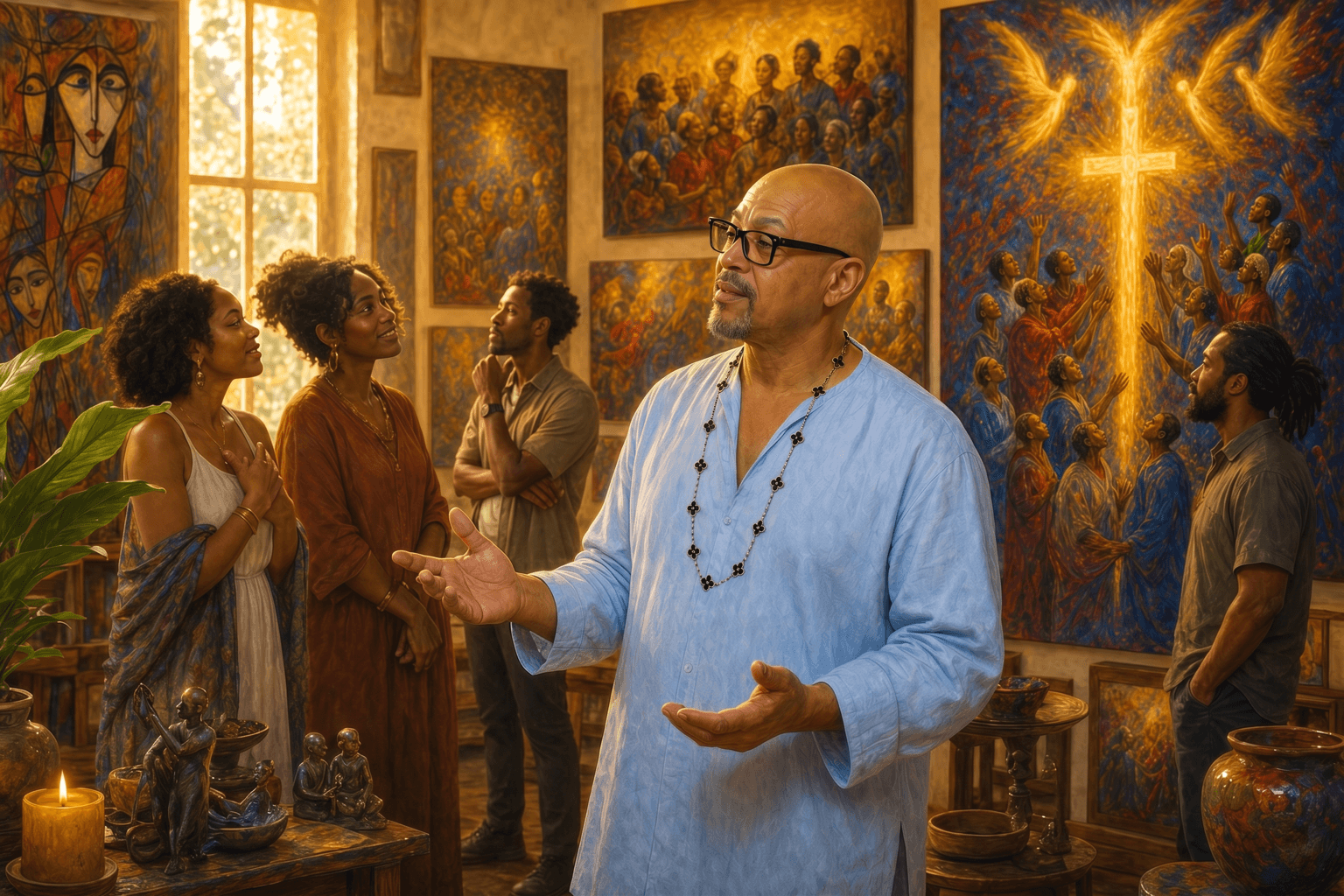
An imagining of Tadeo today, in the gallery he made a safe place.
Art that illuminates God. Medicine for anyone who is enduring.